Showing posts with label France. Show all posts

Friday, 21 June 2013

Top Bar Hive

Three years ago Max made a top bar hive. We wanted to compare the two different ways of beekeeping. We left the TBH outside in an enticing position and waited...and waited. Absolutely nothing! We had swarms from our hives but we wanted these back. For the TBH we were hoping for a wild swarm or a swarm from a callout. But for two years we had no calls for swarms and the TBH found its way to the back of the wood barn where it waited some more.

Then on Monday we were driving home when I suddenly saw a swarm sitting in a tree trunk just a few miles from home. Max returned half an hour later with the only equipment we currently have available - a small step and a sheet - and bought them home. Meanwhile I had managed to extract the TBH from under a pile of wood.

It took a while. These bees were obviously looking for a different des res but luck and the weather were on our side. It started to rain and didn't stop for 24 hours. It's not often I welcome 24 hours of rain, especially during the tennis season, but this time I was delighted. The bees realise that a TBH that was waterproof was the best offer they were getting and filed in. We checked yesterday and they are slowly building comb. We are devising a feeding system for them as the weather is still not great.

I will try and keep you up to date on this hive. I love the idea if a more natural way of beekeeping although I have no plans to get rid of my trusty Dadant hives.


The garden in late June

A wet June but it hasn't all been bad. The pears are amazing; for once I thinned then and it seems to have paid dividends as the fruit is developing nicely and we should have a good crop.

The artichokes always look beautiful and add structure.

Stargazer lilies and decorative poppies outside the kitchen door add colour and the courgettes are delicious - we've just eaten some!


Saturday, 15 June 2013

Strawberries

Never mind Ascot or Wimbledon, we have strawberries galore!

My favourite way to eat them is of course straight off the plant. However, I also love strawberry sandwiches. It has to be on plain white bread - I use the traditional French baguette. Squiggle down the strawberry and eat. Somehow the flavor blends into the bread and explodes in the mouth. You don't believe me? Well, try it for yourself.


Tuesday, 14 May 2013

Spring honey harvest 2013

This is the spring harvest from the oil seed rape. Despite the top picture it is in fact all the same colour. Over time it will change its texture and harden. Taste? Delicious!

One hive gave us a total of 13 kilos. Not one for the record books but given the weather, not too bad.


Friday, 10 May 2013

The garden in May

Our gite is now open for business. These are the photos I took of the garden last week to help promote it.

The greenhouse is being productive. After last year's tomato disaster I decided to keep two tomatoes growing under cover. The rest are in the veggie patch. The lettuces will be reay next week.

Celery to keep Max happy.

Last year a friend told me that you can keep weeds down by mulching with (untreated) grass cuttings so this year we decided to try it. I have them around the toms and lettuces in the greenhouse and around everything in the veggie patch that doesn't have a plastic mulch.

I DON'T like weeding!


Friday, 29 July 2011

Noisette at work


Noisette has been a boon. Normally at this time of year Max performs dangerous acrobatics with a strimmer on the side of the moat. Noisette has changed this totally and as a result my heart beats at a much more regular pace.


We move her approximately every two or three days and this gives her a chance to cut everything within reach (boy, are we careful where we put her!) Now that the field at the back of the house has been cut we can put her at the top of the bank. Being a mountain goat she thinks nothing of the steepness of the bank and just makes her way down eating everything on the way. The brambles at the bottom are next I hope. The photos a bit dark so you can't seem them but they are thick and grow at the rate of knots!

Yes, she's earning her keep.

Saturday, 19 June 2010

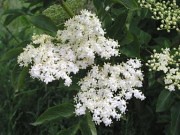
Elderflower Cordial Recipe

Having had a fairly sheltered childhood there are many things which, thankfully, didn't come my way. One of these was the possibility that citric acid might be mixed with powdery drugs to make them go further - or so I'm informed by our local pharmacist who refuses to sell me any despite having known me and my family for over 10 years.

May is traditionally the month for me to make Elderflower Cordial and this year I was determined to make plenty and freeze it but that required an element of forethought. The result is that I bought three packets of citric acid when I was last in England and have kept them safely in the cupboard - there should be enough for next year's cordial as well.

The fact is citric acid is not essential but in my opinion it does make for a better result - more bite to the taste. Anyway, I made about six litres and they are safely in the freezer awaiting hot summer days.

I was amused though to see that other English have come up against the problem of obtaining citric acid in France. I honestly had no idea that it was used by drug users until the pharmacist explained - I insisted on an explanation and he was good enough to at least look embarassed when he told me so I am fairly confident he was accusing me of anything; just following the rules - but since then I have heard it from several nursing friends.

So the moral of this story is buy your citric acid in England if you plan on making Elderflower Cordial in France.

My recipe is in fact that of Hugh Fearnley Whittingstall and is as follows:

Ingredients:

20–30 freshly picked heads of elderflower
Zest of two lemons and one orange
Up to 400ml freshly squeezed lemon juice (6–8 lemons, depending on juiciness)
Up to 1.5kg granulated or caster sugar
Tartaric acid (optional)

Shake any insects off the elderflowers, then place them in a large bowl with the lemon and orange zest and pour over enough just-boiled water to cover them completely (about 11/2–2 litres).

Cover and leave for at least 4 hours, or overnight, until cold.

Strain the flowery liquid through muslin, a clean cotton cloth or a jelly bag, gently squeezing it to extract all the juice.

Measure the amount of liquid and pour it into a saucepan.

To every 500ml liquid, add 350g sugar, 50ml lemon juice and a heaped teaspoon of tartaric acid if you are using it.

Heat gently to dissolve the sugar, stirring occasionally.

Bring to a gentle simmer and skim off any scum.

Let the cordial cool, then strain once again through muslin, cotton or a jelly bag.

Pour the cordial through a funnel into clean bottles, filling them to within about 2–3cm of the top.

If you want you can freeze the cordial for later use. If you use plastic bottles, only fill to about 5cms from the top and don't tighten the lid until after the liquid is frozen. Alternatively use ice cubes containers or ice cube bags.

Friday, 28 August 2009

Honey Harvest 2009

Ten days ago we finally managed to harvest our honey. I had promised my friend Alex (who raises Alpacas) that if we could time it right she could come and help us. Tuesday suited all of us and Tuesday it was.

The day was perfect. You need fine weather when you take the honey from the bees and we certainly had that. Perhaps a little too hot for comfort but that is better than wet and windy!

The whole process took about four hours. We started by removing the supers from the hives.


This hive was one of our best - both these supers had nearly totally full frames (the supers are the smaller "boxes" on top of the bigger green box).


The other excellent hive was the one we have dubbed the wild hive. Again we had nearly two complete supers although we were unable to take some of the frames from the lower super as it was attached to the main log!

Most of this year's harvest came from these two hives although all of the hives produced something.


Before we put the supers into the trailer we had to brush as many bees as possible off the frames. Not always easy as the bees aren't too keen on being deprived of their honey!

Last year we used the wheelbarrow to take our honey harvest back to the house - but that was last year and since then we've actually had rather a lot of sunshine and the bees have been able to collect just a bit more honey! So this year we hitched up our trailer and took it into the field.


This photo was taken right at the start when Max was lighting the smoker. Each time we put a super into the trailer we covered it as much as possible with the sheet which you can see at the front of the trailer. This didn't really fool the bees as the smell of honey was so strong but it did stop them from getting back onto the frames. The trailer was double stacked with supers and we were VERY excited!

Back at the house the fun started. Max put the air compressor outside the kitchen and reduced the pressure to a minimum. Using this he and Ralph were able to blow the remaining bees off the frames. By this time we had closed all the doors and windows into the kitchen as we had heard stories of clouds of bees arriving during the extraction! Ralph bought the supers in and Alex and I started the extracting.


A word here for first time honey extractors - put newspaper down on the floor as much as possible. If not you have honey dribbling onto the floor which is tedious although not the end of the world. What is a bore though is when it is walked in and then carried all around the house. I also found it useful to change into flipflop style shoes as they could be washed easily when I did inevitably walk in honey.


In the pictures above Ralph and I are scraping the wax off the first frame. The bees close the cells once it is filled with honey and the water content has been sufficiently reduced (water content is a subject I am not qualified to explain but if the cell is closed the job has been done). From this point on the job is a sticky one!


We all took a turn with the extractor. There are two types of extractor: radial and tangential. The difference is in the placement of the frames: in the radial extractor, frames are placed so that they have an edge to the edge of the extractor; in the tangential the frames are placed with a side to the edge of the extractor. I haven't explained this well but you can google for images of both. In practical terms it means that with the tangential extractor you extract one side of the frame and then turn the frames around before extracting the second side. One day we will be able to upgrade to a radial I hope but in the meantime our small three frame tangential does just fine and it wasn't long before the liquid gold was running out of the tap into the storage buckets.


This is what we do it for! As the honey comes out of the extractor it passes through a fine nylon gauze which catches the worst of the bits and pieces - bits of bees, wax cappings, general debris. This bucket takes 25 kilos of honey and we filled two of them. We then filled two more smaller, 3 kilo, buckets and a couple of pots straight from the extractor for Alex, us and a couple of other friends. Plus the four honey combs we took a short time ago, each weighing nearly 500 grams. In all then, we probably had about 60 kilos of honey. Oh joy!

We left the honey in the storage buckets for a week to allow it to settle and for the air to come to the top and then Max and Guy potted it up while I was in London. This is what I saw when I walked into the kitchen last night:


The lady who gave us all those seedlings earlier in the year also gave us well over 100 honey pots, with lids. Glass honey pots don't come cheap and she has saved us about 40 euros - you know who you are and once again, thank you!

My job today is to order some labels so that we can sell some of the honey to friends who have been asking for it. In the meantime we will store it somewhere cool and dark.

Thursday, 23 July 2009

Swarm Collection

Yesterday evening at exactly 8pm the telephone rang. I know it was 8pm because I listen to a radio programme every evening at 8.02pm and I was wondering which member of the family had decided to deprive me of that possibility.

But I was wrong; it was in fact a lady about 20kms away who had found my details on the internet where I am listed as "willing" to collect swarms of bees. She sounded a little stressed to say the least and on closer questionning it appeared her friend had been stung twice that afternoon when they'd discovered a colony of bees living under a wooden box that they use as a garden seat. The box had moved slightly and life heated up a bit.

At the time Max was busy trying to persuade a light switch that at only 8 years old it really should carry on functionning so instead I took our son Ralph. Early evening is a good time to collect swarms as the workers have come in and you have a good chance of collecting up most of the bees. We packed up the car with the usual equipment: bee suits, gloves, boots, hive tool and brush, swarm box, smoker and fuel, matches, sharp knife, basket and sheet, camera. As it turned out the only thing we omitted was a garden spade and I have to admit it never occurred to me it might come in useful!

When we arrived the two ladies came running out of the house and were indeed stressed and very worried. Ralph and I gathered up everything and got changed by the car then went down to the bottom of this wonderful garden which they had created out of a farm field. When I remarked on the green grass (ours turned brown some weeks ago) she told me there was a number of small streams running underneath the land down to the river; the farmer next door never had to water his crop of maize for the same reason.


The swarm collection was straightforward. You can see in the pictures where the swarm was situated.


The bees had obviously been there for a while because there was quite a lot of comb and sealed brood in the nest. Ralph cut the comb off the bottom of the box and having gathered that we brushed as many bees as possible in there too.

The spade, in case you are wondering, was used to scoop up a number of bees sitting on the ground. A couple of shovels and they were in the box. The rest we left to march up the sheet which I always consider one of the marvels of swarm collection - and also reassuring as it confirms the presence of the queen in the box.


The march can take a while and when the two ladies saw us sitting on the grass waiting, they came over with handfuls of fruit which 30 seconds earlier had been on their trees. Apricots and juicy, tasty plums which were delicious.

Back home Ralph put the hive in our field and opened the entrance hole at the front. Now all that remains is to fix the comb onto a frame. Unfortunately it's raining this morning but perhaps this evening or tomorrow we'll be able to do that. It's important to do it as soon as possible otherwise the bees just carry on building, starting with the roof!

Tuesday, 21 July 2009

A year of fruit

We have now lived here for 11 years and I can only remember one other year like this one for fruit.

There were so many cherries on the trees that even the birds couldn't eat them all, leaving more than enough for us.

Strawberries were the next delight and although we didn't exactly struggle to eat them all we came very close to striking strawberries from the luxury fruit to be savoured list. We only had a few raspberries but then we only planted them a few short months ago so they are forgiven.

For the past two weeks we have been gathering mirabelles - small yellow prunes with enough flavour to eat raw but not enough, in my opinion, to bother cooking with. We had so many that this year we squeezed a lot and now have about three litres of juice in the freezer ready for sauce on the ice cream. The pigs love mirabelles and we gather about half a bucket for them each day. (They also loved the strawberries!)

Our peach tree, which has struggled to provide more than one edible fruit per year, has this year gone mad and there must be at least 30 peaches which, if I don't pick them today, will be devoured by the wasps - I just hope they will finish ripening off the tree.

The pear trees are in danger of breaking their branches despite the fact that I thinned them vigorously.

And finally the fig trees are promising HUGE amounts of fruit.

Our real worry are the six new trees we planted in the autumn - four apples and two plums. They are showing severe signs of thirst despite having masses of water during the winter and regular watering by Max and I now. If we can get them through to the winter I think they'll survive - but there's August to deal with first.

Saturday, 13 June 2009

Broad Beans


One of the great things about growing your own veg is that your "fussy" children start eating vegetables they otherwise turn their noses up.

One of the disadvantages of growing your own veg is that your "fussy" children suddenly discover the delights of vegetables they didn't previously like.

Both statements are true! I love broad beans but my children didn't. Notice the past tense! Now they go as soon as they are cooked. The ones in the shops tend to be not fresh and also much bigger in the pod. I pick mine quite young and tender. There is no comparison.

The biggest problem with broad beans is black fly but actually I tend to ignore it. It comes, it devours and it finally goes away leaving horrible rubbish on the pods. But let's face it: we're not eating the pods and the beans inside are not affected. I do rinse them under the tap but then they are boiled - and as far as I'm concerned a little bit of dirt just adds to the flavour (I hope!).

So this picture is the third lot I've picked in two weeks and finally I managed to get some into the freezer for future enjoyment. The picture shows the pods in all their black fly glory. Just remember...it's what's on the inside that counts!


I've included the honeysuckle because it smells fantastic. We brush past it as we go from the car to the kitchen, disturbing the bees but absolutely loving the smell.

Monday, 30 March 2009

Bees - vocabulary problem!

A quick update and correction on the wild bees we have housed.

First off it has been pointed out to me that these are not a swarm but an established colony and of course I was a fool to describe them as a swarm. We were asked by a friend to collect a swarm and once in my head it stuck. But a colony it is. So Polly is right - even in this lovely climate (let's forget the last two summers!) the bees do not swarm in March. OK, my head is hung in shame. On with the update.

I have changed the super for a make-do brood box. We put a brood box on but of course it has openings and was no good. Instead we have put brood frames into two supers, one sitting on top of the other to give the height of a broodbox. If these bees do come up then we will be able to transfer the frames to a proper broodbox and go on from there.

Now, on to the second subject...

I have been criticised by someone here in France on another forum (this was the person who pointed out my vocab was way off). He doesn't explain very well but his comments are as follows:

"What can I say apart from it was not a swarm if it had taken up residence in a tree it was an established colony. It certainly was not from this year and why should it swarm from the tree in April? Had you had someone of experience and qualifications, not necessarily a keeper of bees long term, but a beekeeper with you it would have been easy to remove it and prevent it returning to the log. It is no different to a summer swarm in, say, a wall easy if you know what you are doing. If the bees are still in the green hive I wish you the best of luck in trying to manage it this year. I thought the bees used the suns position above them to build their comb in a true vertical plane. I always enjoy your postings as there is so little to bring cheer these days. I wish you well in your endeavours. I rest my case."

I have enormous faith in bees and less faith in my ability as a beekeeper but I do try and do my best. In an ideal world I would far rather be working alongside another beekeeper but unfortunately this isn't possible. I am always open to helpful suggestions (which seem to be lacking in the words above) - indeed I welcome them. Thank you to those of you who have taken the time to comment, both on the post and by email. Like I said constructive criticism is welcome and even more so is advice.

Wednesday, 4 March 2009

Feeling virtuous

For years now, five at least, I've been talking the talk and carefully avoiding the hard work.


We have four flower borders on the lawn which I created about 10 years ago. My parents were selling their house and I was taking some plant cuttings from the beautiful garden. I did a trip to England and came back with about 80 cuttings all potted up. Most of the cuttings came from the borders in the picture on the left but I've included the picture on the right as it is the pond I fell into when I was about four and my brother insisted on taking his brand new watch off before he pulled me out - the watch had been a Christmas present so the water was COLD!

Nearly all took and many have seeded and developed. Anyway, I dug the flower beds in a hurry and although I was pretty good about clearing the roots I was working in a field that had recently been cow pasture. So very fertile but full of perenial weeds.


The borders in June showing many of the imported plants.

I realised very quickly that the only solution would be to start again but as the beds developed it seemed a real shame to empty them out. I also didn't fancy more back breaking digging and no-one else wanted to do it! Clearly a rotation was required and today we cleared, more or less, the first bed. More or less means that as there are two pear trees, one at each end, we've cleared between them. We solemnly dug up old friends and split them up and replanted elsewhere. We took out as many weed roots as possible and we have covered it in wonderful manure from the farm next door (same cows!).


Finally, so that we won't be tempted to put plants and flowers back in before the autumn, I've put in some seed potatoes. This is my cunning plan for improving the soil and it also uses up a few more of the seed potatoes. I'm hopeless at mounding up potatoes and instead I put "stuff" directly all over the potato beds. "Stuff" includes, in no particular order, garden compost, manure, leaf mould, straw. Usually about three doses is enough to keep the tubers covered and prevent them going green and the result is that once all the potatoes have been removed from the bed the soil is absolutely wonderful.

Once this first bed is replanted we can clear the second bed - more potatoes if my plan works! - and so on until all four are done. I just hope it isn't like painting the Skye Bridge!

Sunday, 1 March 2009

A Mixed Week

The list from last week is definitely shorter but not as short as I would like. However, one reason is because I was working on a client's chair and that is better than no work at all - therefore no complaints!

We haven't got around to putting more chicken eggs into the incubator and I still haven't bought the broad bean seeds. Still time so no worries.

However, the first lot of potatoes (Maris Piper and Aloe) are in. The figs are pruned and the bees food (sugar candy) has been topped up where required. We bought far too many seed potatoes so we will start work on a second potato bed this week. We also need to fence off this whole area against the rabbits. Anyone tried doing this with an electric wire?

I also did an experiment fluid sowing some carrot seed. It's still too cold to sow them outside so I scattered some on a piece of paper and left them covered in the window for a few days. As soon as they started to show signs of development I put them into a mix of cornflour and water and now they are sown in the greenhouse. I've started off the second lot and hope to have them in by the end of the week. I've read about this technique for years and have never tried it - I'll let you know.

One sadness to report. The second goose (Dipstick to his friends) hasn't survived. I came down on Thursday and Donald was making a dreadful racket. His little friend was lying lifeless on the floor of their temporary home. We were not totally surprised. Dipstick took a long time to get out of his egg (hatching time I mean) and despite running around with Donald and seeming very happy he wasn't growing as quickly as his big brother. Donald is growing visibly by the day. Two days ago we were very worried about the attention he was getting from Tickel - Ralph's Teckel or Dachsund. Today however, Tickel actually ran away from him. Whether this was fear of Donald or anticipation of trouble from Max or me I don't know; it won't be long before Donald is the bigger beast though.

Jobs for this week: The extra potato bed; fix the pigs' fencing as they arrive in two weeks time; finish weeding the flower beds and put the manure on them. That should be enough for the time being!

Thursday, 12 February 2009

New Year, New Life

Needless to say, when push comes to shovel I prefer to be a warm weather gardener which isn't very good if you are trying to be self-sufficient! However, we are enjoying enormously the fruits of our 2008 labours: vegetables from the freezer, apples still in the boxes and of course pork in the freezer. We also have a number of chickens in the freezer as we had a large number of cockerels and, finally, we have been given a leg of wild boar by the local gardien de chasse. And of course we are getting plenty of eggs from the hens.

At the end of last year I put some onions and garlic in the vegetable plot and now it's about time to plant the next lot of onions. But it's so cold out there that the motivation factor is dreadfully low! However, we have started to prepare the new potato plot. Against all advice we have rotavated this area and I am quite certain that we will be regretting this for a fair few years as all the chopped up roots of bindweed come back to haunt us. But Max can't dig at the moment (he's just had his carpal tunnel operation) and I dug so much last year that I just couldn't face it. So out came the rotavator.

We still need to fence this second vegetable plot area. We have a large rabbit population here and I am not happy to plant one for me and twenty for them. So the fence is on the "to do" list. We have, however, bought our potatoes and onions for planting and this year I'm also going to plant some Jerusalem Artichokes. I thought I would put them at the end of the pigs' enclosure so that when I've dug them up the pigs can take whatever I've missed.

But things have been happening up the garden path despite my laziness. To our astonishment one of the hens became broody over Christmas. We found her tucked away in an outhouse between the drying machine and the wall, well hidden and out of the wind but still very cold. We left her alone and on 24 January she suddenly appeared with four chicks. (That mean that she kept them warm in temperatures of -10 degrees during the night and not much warmer during the days.) Sadly, only one of the chicks survived beyond three days but it is wonderful to go out and see them wandering around the yard, mother hen gently lifting her wing whenever the chick needs to warm up or get away from some terrifying object; a human being for example!


Soon after Christmas also we were given two goose eggs, one at the beginning of the week and one a few days later. We put them both into the incubator on the days that they were given - in other words there was a gap of about five days. This morning I was tidying up the room and suddenly noticed one of the eggs had a hole in it. On further inspection I heard wonderful squeaking noises and sure enough a couple of hours later the gosling popped out. I might say that he (well, he's a he until he proves otherwise!) is a lot stronger than the chicks we've hatched and a lot bigger too!

An hour old


Two hours later

I have left the second egg in the incubator in the hope that it will hatch in a few days time.

So there's new life at Gennetay and very soon it will be warm enough even for me to stop making excuses and "get out there".

Tuesday, 18 November 2008

Farewell Happy Hams

Some of the pictures on this post are of a dead pig - please do not look at the pictures if you are of a sqeamish disposition!


The pigs are dead, long live the pigs.

And so they shall, both in our memories and, more practically, in our freezer and ultimately on our plates.


Before I go on I want to emphasise that the pigs did not suffer. They were killed by a professional debiteur who used what I believe is called a bolt. They were being scratched at the time by my husband. The photos below are graphic but please remember that this is reality.

OK. Speech over. Description now follows of what we did this weekend. First off on Friday Laurent arrived to slaughter the pigs. I was not there at the kill but went up afterwards to help with the initial butchering so that they could then be hung overnight before being cut up and "dealt with" on Saturday. As you can see in the photo, the pigs were hoisted onto a ladder to make his job easier and the first thing he did was to pass the flame gun over the entire body to remove the hair. They were then scrubbed and hosed down.


The pigs had to be gutted and the livers were kept for the pate and our Monday "Liver night" (more on that later).


And that was just about it for Friday. Our pigs were suddenly no more than a very fond memory and two carcasses. The real work began on Saturday morning at what my father would have called "sparrow fart".

We decided a month ago that we would ask Laurent to do the butchering. He is after all a professional and although Hugh Fearnley-Whittingstall has an excellent course available on his website we knew that faced with two large carcasses we would probably not do a very good job. Laurent was fantastic. He had so many buckets I lost count: pate, rillettes, sausages, fat, rubbish and fromage de tete. Meat and bones were put into each bucket accordingly. Two enormous pots were simmering - one for the rillettes and the other for fromage de tete (this is eaten cold and I can't really describe it but please, it is not the guts which is what everyone appeared to think - that is called andouillette and we had opted out of that option!).


Whilst we stood and watched and occasionally cut up vegetables Laurent got on with the job in hand. Joints magically appeared with and without bones; chops mounted up in a separate tray; spare ribs in another; did we want bacon? And how many hams were to be smoked?

As it turned out we didn't use the liver for the pate as only one was usable - the other had a small number of spots and we had to throw it away - and we wanted to keep the one we had for Monday evening.

By lunchtime we had bagged up all the meat except the sausages which needed to drip a bit to dry off and the rillettes and pate. And of course the Boudin - a close relative to Black Pudding and absolutely, utterly delicious! We put everything in the freezer and took a break for lunch. Laurent had very kindly given us some Pork Liver Pate and that was enjoyed with French Bread and salad.

Later in the afternoon he was ready with the rillettes and the pate. We only had eight pate bowls so we have bagged the rest up - it is frozen uncooked so this is not a problem. And of course the sausages...


These took a little time to bag up as we wanted five per bag (2 parents, 3 children) and there were a LOT of them! In theory I have been very organised as sausages are in bags of 5 and chops in bags of 3 (I can't remember the logic but at least I know how many there are!). The boudin came as three enormous sausages, each about two metres long; so these were cut into pieces about 30cms long and bagged.

Back to Monday night and the liver...

As I have never cooked pork liver before a friend very kindly agreed to come over and cook it with us and of course eat it with us! So we decided we'd have a degustation du porc, or a pork tasting evening. Whilst Joyce prepared the liver, I cooked some of the boudin and sliced some of the fromage de tete. I was determined that any produce was to be from the garden so my chard parcels were there, together with mash potato. There were nine of us in all and we started by drinking a toast to the Ham One and Ham Two - it seemed impossible to not mention them. And then the feast began. Everything was delicious although I think there was less enthusiasm for the fromage de tete. It's the sort of thing you would eat very happily if you had a blindfold on as it tastes delicious but looks less delicious than it tastes!

Right from the start of this project we have had people telling us that we wouldn't be able to slaughter the pigs (or rather, get someone else to do it) as they would become our friends. Well, yes, they did become friends but there was never any doubt in our minds of their final destination. We gave them a happy home, fed them, played with them and loved them. I wasn't there at the end but that was because I was worried that my reaction would stress the second one. I said goodbye to them in the morning.

Friday, 26 September 2008

Leeks - disaster!

A while ago I planted just over 100 small leeks. I love adding leeks to just about anything - a good substitute to onions when I've run out and a lovely taste all on its own.

But disaster. I noticed a week ago a few were still very undeveloped and skinny - sort of like Twiggy but in leek-world. I investigated and there was a sort of powdery white mould on the inside of the bases. I thought perhaps it might be a worm and as some were unaffected I hoped for the best. Then yesterday I saw orange spores on the leaves of just about all of them. Quick look in the book and sure enough they have rust. It doesn't affect the taste but it is incurable and the plants stop growing. So, I can eat what is there but they won't get any bigger. Some of them are still pencil size so we're not exactly going to get a feast out of them.

Now that all the children have gone back to university (they left this morning - I have the house to myself) I will have time to get the veggie patch sorted. Sadly the first job will be digging up all the leeks and deciding which ones will be worth keeping.

To add insult to injury, the leaves affected by rust (ie. all of them) cannot be put on the compost heap, but burnt. I can't even give them to the pigs as the spores will stay in the ground and come back to haunt us. AAAAARRRGGHGHHHGHH!

Think of me when you tuck in to leek soup this winter...

Friday, 19 September 2008

Goose Island

At the beginning of this year we had a visit from the fox who took our two remaining Donald Ducks. They were ten years old, walked with a limp and should have been dispatched long before; but our sentimentality wouldn't allow it. The winter was cold and for only the second time since we've lived here the moat froze to the extent that we could play ice hockey on it. Unfortunately it also meant that Donald and Donald couldn't escape into water when the Fox came to visit.

We gave Max some geese for his birthday and recently two small ducks have been added to our wildlife. As a result we have been humming and haa-ing about the winter and the possibility of a second visit from the Fox. Finally last month Pillock Island was decided upon. Max decided that a pile of rocks should be placed in the middle of the moat, surrounded by a wire netting to hold them in place, and a pallet put on top. It was a family affair with the two older boys helping their father and me taking the odd photo. The youngest very sensibly did his homework!


The pile of rocks were punted out (boy, they weighed a ton!) and dropped in place inside the wire. The pallet was put on top and Max even stood on it...briefly. It worked a treat and Dad was able to do his "I told you so" look as he'd taken a certain amount of helpful advice from his sons...and ignored it all.

But then, the island started to list a bit. And then it very gracefully sank. He hadn't counted on the amount of mud at the bottom which the rocks had disturbed and then sunk into! That was the moment it became Pillock Island although my naming ceremony wasn't appreciated!


My idea of four anchor rocks holding the pallet in place was scoffed at several times but finally a mixture of more rocks and the anchors was used to great success. We left some bread on the island and by the next morning both ducks and geese were happily using the island. Since then the geese have decided it belongs exclusively to them - hence the renaming of Pillock Island to Goose Island.

Wednesday, 20 August 2008

Blackberries and neighbours

When people ask me where we live I usually tell them "in the middle of a field". Of course it's not true but we are completely surrounded by agricultural fields and as a result we refer to anyone within three kilometres as a neighbour.

All our neighbours are extremely nice...bar one. A widow of non-descript age - perhaps in her 70's - and her son live rather too close for comfort; perhaps 700 metres away. They are known by all around us as "trouble" and indeed, by the local gendarmes. They are both, in my opinion, unhinged and spend their time causing trouble for other people.

An example - our immediate neighbour, a farmer, was clearing his ditches last spring and as he had all the machinery out, cleared a ditch that was blocked but is technically the responsibility of the commune. This is a ditch that flows downhill towards the road and it was overflowing at the bottom, putting water over the road. Our neighbour did a good job and was extremely careful not to damage the sides of the ditch. Not good enough for Difficult Neighbour. Quick as a flash the son was outside and complaining that our neighbour had done it at all. He called a Huissier - a type of lawyer - who turned up and in turn called the Maire. The Maire thanked our neighbour very much for taking the trouble to sort out the ditch and that was pretty much the end of it. But it leaves a sour taste in the mouth.

Yesterday I went out to pick blackberries. Half way down our drive there is a turning to the left which runs down to the road. Although our drive is private (we share it with the farmer), the 200 metre stretch of linking track is public; and of course it has the best blackberries. I've been picking these blackberries for ten years and never has anyone suggested that I am doing anything wrong. And never in ten years have I seen anyone else blackberrying. In other words if I don't pick them the birds take them or they rot.

One of my favourite puddings is apple and blackberry crumble using apples from our tree and wild blackberries. Every year I collect as many as possible and freeze them in small quantities - there's usually only a small quantity left by the time I've finished picking/eating!

So there I was picking happily in the sunshine when Mrs Difficult Neighbour arrived on foot. How sad. She had walked 500 metres especially to tell me that I had no right to pick blackberries that were not on my own land. She insisted I had to ask permission but when I asked from whom she couldn't say. After five minutes of listening to her I'd had enough. I told her that I was going to carry on picking blackberries; that I would happily give her some if she wanted them (she didn't); and that if she wanted to she could lodge a formal complaint with the Mairie but as I wasn't trespassing or stealing I suggested she wouldn't get very far. That was the end of it but only because I walked away and carried on picking.

I was in the village this morning and decided that I might just as well relate the rather dull story to the Mairie secretary (who confirmed that I'd done nothing wrong). I know it's silly but the fact is Son of Difficult Neighbour is trouble in a big way and not someone I enjoy meeting at any time. He's not adverse to driving cyclists off the road if they don't move over far enough and unfortunately, he's not adverse to driving up to our house to complain about whatever injustice he thinks we are responsible for. So I thought it would do no harm to let the village authority know what had happened.

The good news: I have 500 grams of blackberries in the freezer and will be out later today to pick more - from a different area perhaps!

Thursday, 14 August 2008

Figs -- straight from the tree!

It was F's 50th birthday a month ago and we gave her a fig tree as our figs do well here and she is always very jealous.

I remember eating figs as a child in Berkshire. We were lucky to have a south facing wall that lapped up the sun and the figs loved it. In the morning we would eat a couple before going off to school and then in the evening we'd eat as many as possible that had ripened during the day. It was a battle to reach them when they were perfectly ripe but before the wasps had found them. Oh the joy of a freshly picked fig!


Yesterday was the plantation ceremony for F's tree. Despite having a large garden finding a suitable spot wasn't easy. Figs need as much sun and warmth as possible - but so do grapes and all their south facing walls were taken by beautiful looking vines! We compromised in the end and set to, taking turns to dig the hole in the sunniest part of a walled garden about two metres out from the wall.

The French always laugh at us when we tell them how we plant our figs. It is a system well known to anyone who has looked in an English book on the subject but not to the French. Having dug a deep hole we put in a square tube made of concrete - more commonly used for access to water pipes - and put some large stones at the bottom of it. (If you have one available the drum of an old washing machine is even better than the concrete.) Then some good compost, followed eventually by the fig tree which had been soaked in water all morning; and finally the rest of the compost and some of the original soil.

The point is to restrict the roots of the tree so that it can put more effort into ripening fruit than into producing leaves. I might add that the French can laugh all they like but they do admit that our figs grow better than theirs!

Anyway, fantasy then took over and we all danced around the fig tree singing Happy Birthday. By the time we left I suspect F & T were confident that we are total lunatics - let's hope that this time next year they will have reason to change their minds!

Right that's it - I'm off to feed the pigs and gather a few of our own figs on the way!